
What reflective insulation is and why not all products are the same
Published on 04.09.2026 · Isoflect Insulation technical team
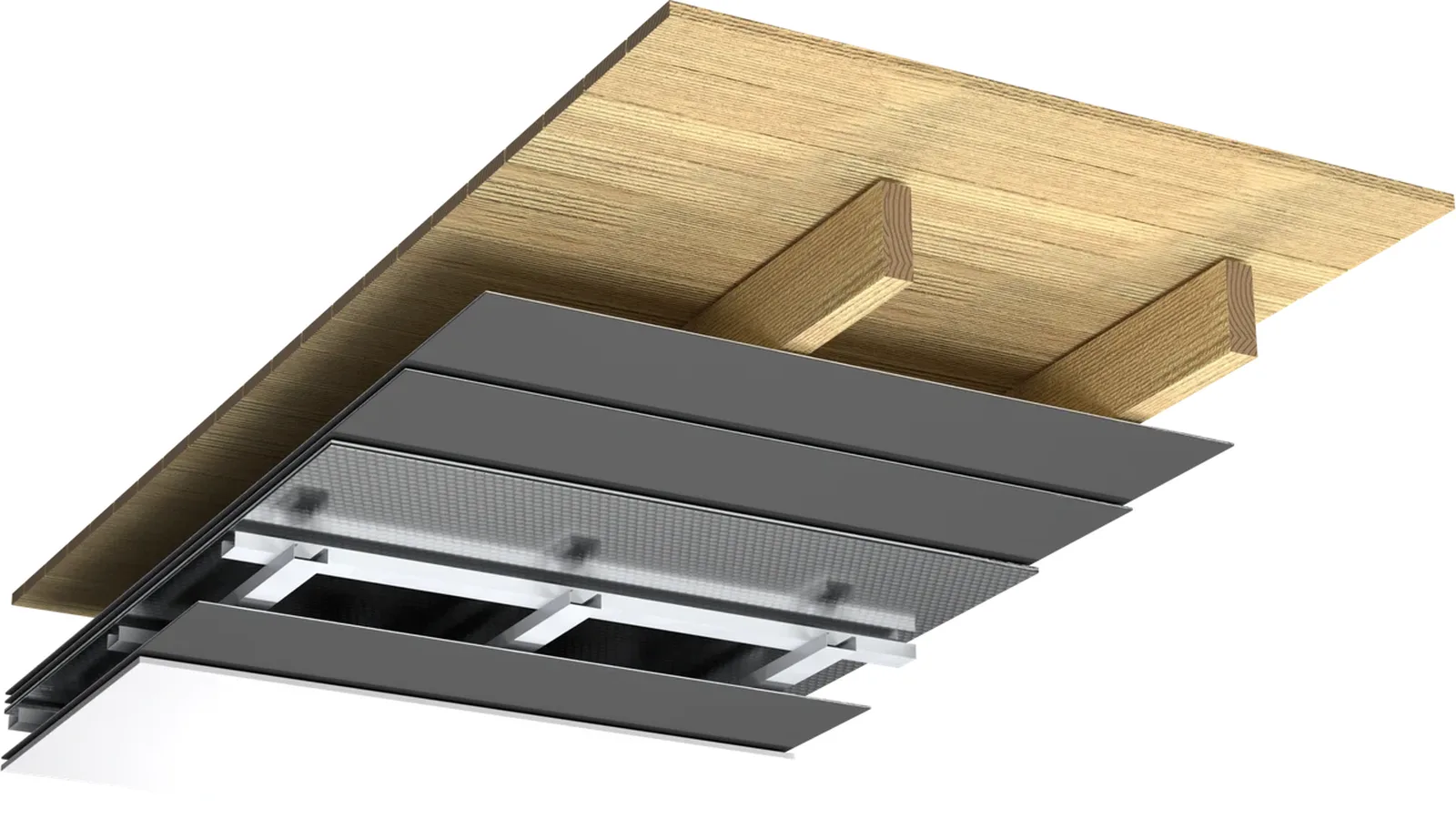
Reflective insulation materials return the heat received by radiation instead of absorbing it. Unlike wool or polystyrene, which slow down the heat passing through their thickness, a reflective surface rejects it from the outset.
This is the only difference that matters, and everything else follows from it: what they are used for, where they are installed, why they require an air space and why two products that look identical may have completely different performance.
How it works
Heat reaches a wall or a roof by three paths: through the solid material, with the circulating air, and by radiation — as a wave, without heating the air along the way.
In summer, it is mainly radiation that comes through the roof. The tiles or the metal sheeting heat up, and the heat descends from there as if from a radiator. The wool receives it, holds it within its mass and releases it a few hours later, indoors — which is why a habitable attic is hottest in the evening, not at midday.
A reflective surface does not receive it. It sends it back before it enters. In winter it works in the opposite direction, with the same surface: the heat from the room is returned to the room instead of being absorbed into the structure.
The condition that most people overlook
A reflective foil bonded directly to another material reflects nothing. It conducts.
In order to work, it requires a layer of still air next to the reflective surface. Without that gap, the product may be excellent and the result zero. This is the most frequent installation mistake and explains most cases of “we installed foil and nothing changed”.
Genuine aluminium or metallised film
This is where the difference lies that nobody sees on the shelf, because both shine in the same way.
Aluminium foil is genuine, rolled metal, of the order of tens of microns. Metallised film is a layer of metal vaporised onto plastic, of the order of a fraction of a micron.
The difference is measured by a single quantity — emissivity, that is, the proportion of heat that the surface passes on instead of returning it. The lower it is, the better:
| Surface | Emissivity | What it means |
|---|---|---|
| Aluminium foil (Isoflect Roof Pro, Gold) | 0,05 | Almost all the heat is returned |
| Aluminised layer (Isoflect Roof Optim) | 0,18 | More than three times as much heat passes through |
Values from the Isoflect technical data sheets, measured in accordance with prEN 15976, before and after the artificial ageing specified in the standard.
How to tell them apart when purchasing
Not by their appearance, nor by the word “reflective” on the packaging. Ask for the emissivity stated in the technical data sheet.
A manufacturer that works with aluminium foil declares it, because it is that manufacturer's argument. If the value is missing from the data sheet or the seller cannot tell you what it is, you already have your answer.
What reflective insulation does not do
It does not replace thickness. Heat passing through solid material is addressed by mass, and there wool or fibre remain necessary.
A correct build-up uses both: fibre for the heat passing through the material, the reflective surface for the heat arriving by radiation, and sealed joints for the heat escaping with the air. Anyone who sells reflective insulation as a substitute for conventional insulation is selling it incorrectly.
Where they are used
- Beneath the roof covering, over the roof boarding — against summer heat and condensation
- On the inside, between and below the rafters — in habitable attics, where there are no centimetres to spare
- On walls and ceilings, beneath the plasterboard
- In floors, beneath the screed and beneath heating systems
- In unheated attics, as a shield against heatwaves
See the complete map — which Isoflect product is installed in each area of the house →
Not sure what goes where and in what order?
Tell us how many square metres you have and how deep the rafters are. We will tell you the complete build-up and everything you need. It takes two minutes.
Open the configurator